
That’s a pretty simple title right?

But as most of us know, while it is an easy craft to learn, doing it effectively and without leaving a colossal mess is easier said than done.
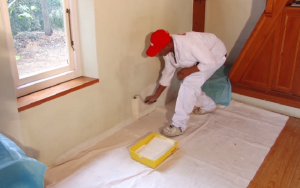
Anyone who has ever taken on a painting project knows it can be tedious, time consuming, frustrating and messy. Even for the seasoned professionals, painting can be a grind.
Planning your course is one of the most basic recommendations we have. From determining colors and supplies to mapping out the best areas to start and where you want to eventually finish are keys to doing the job right and efficient.

When we talk to professional painters, they always stress the importance of planning your process and thinking about the end result you want to see and working backwards from that vision. It may sound crazy, but envisioning what you want to have at the end can help you a great deal in determining what path you want to chart to get there with the least amount of mess, frustration and agony. Yes, agony.
So to avoid that agony, plan your course. Take the time to carefully look at what may be the easiest and most difficult aspects of your project and determine where you want to begin and finish and know what special challenges may arise. In doing this, you not only insure the best path to success but also reduce the chances of making significant errors along the way.
Also, Google some videos or search YouTube on special tips and instructions from professional painters as well as those online who offer free advice. This can go a long way in making sure you avoid the pitfalls of painting that so many of us are all to aware of.
We hope this help you in your planning process and gives you some much needed help along the way.
Get it done!
…


 For all people, it is evident that color in its different expressions is an essential source of information. It has a subtle influence on the state of mind. A painting can contain, for example, dark and gray colors, fostering a quiet space or, on the contrary, a pleasant, colorful, clean and full of optimism landscape. It is easy to recognize the difference that different tones emanate and the associations they represent. If you transfer situations and pictorial representations to a physical space, fixing their permanence, you will continuously project a specific type of Qi or energy.


 The five elements and primary colors
 You should not be rigid in this aspect and think that you should paint each “area” of a particular color. The geomantic chart in its different focuses, the colors associated with the cardinal directions and the study of the elements gives us varied and sometimes contradictory information about the colors to be used. Imagine that you follow the method that assigns the color according to the theory of the five elements and their relationship with the cardinal directions.
 TIPS FOR PAINTING ROOMS: